Getting a Rottweiler puppy is such an exciting thing and as responsible owners, we would like to care for our Rotties the best we can.
You probably already know that Rottweilers are among the breeds with a predisposition for hip dysplasia.
So when I got my first Rottweiler puppy, I was so worried about my dog’s growth, sudden growth spurts, as well as her diet and exercise.
Besides the health aspects, isn’t it interesting to know how big your young dog will get?
Especially large and giant breeds have such explosive growth that it’s hard to believe that a few pounds could develop into nearly 100 pounds in a matter of months.
This article covers everything you need to know about the Rottweiler’s growth, the growth stages, and how you can even calculate your dog’s estimated adult weight and height.
Rottweiler Growth Chart
Your Rottweiler’s adult weight and height are primarily determined by genetics. Looking at the sire and dam of your puppy will give you the most information about their final size.
While female puppies come more after their mother and male puppies more after their father, they will generally receive 25% from each of their parents.
Another 50% will come from a gene pool mix between them.
It’s very important to focus on your own litter rather than trying to achieve a certain weight or height goal that you have seen from a totally different litter.
Contact past litters from your chosen breeder and ask about their experience regarding their puppy’s health, size, and temperament.
I would recommend this to everyone still in the process of finding a reputable breeder.
Going with the biggest puppy of the litter won’t promise you the biggest adult either, but it’s generally advised not to pick the runt of the litter if you need size for a certain job (most probably don’t).
Females usually tend to be smaller in size and weight.
Besides genetics, diet, and activity level play major roles.
Unfortunately, many owners tend to overfeed their Rottweilers in an effort to speed up their growth and make them as bulky as possible.
Overfeeding any dog is dangerous but especially concerning in large and giant breeds.
Keeping their growth at a slower rate and their weight on the lighter end of the scale will ensure a healthy growth process.
Choosing the right food is crucial in their development.
Some brands offer kibble that is specifically designed for a certain breed but that doesn’t mean the ingredients list is a-okay.
Furthermore, there is a difference between the German and American bloodlines.
German Rottweilers are slightly larger and more muscular compared to their American cousins.
Working lines and show lines also have their differences in size, exercise needs, and temperament.
Working dogs might be stronger with a high drive and activity level which in turn also influences their growth.
Keep in mind that the following numbers are only estimates and mere guidelines and your dog can still be perfectly healthy without hitting these targets.
Your dog might grow to be on the heavier end or ends up as a smaller specimen.
| Age | Weight (f) | Height (f) | Weight (m) | Height (m) |
|---|---|---|---|---|
| 8 Weeks | 13 lbs (6 kg) | 13 inch (34 cm) | 16 lbs (7 kg) | 13 inch (34 cm) |
| 10 Weeks | 22 lbs (10 kg) | 15 inch (40 cm) | 26 lbs (12 kg) | 15 inch (40 cm) |
| 12 Weeks | 33 lbs (14 kg) | 18 inch (45 cm) | 37 lbs (17 kg) | 18 inch (45 cm) |
| 4 Months | 37 lbs (17 kg) | 19 inch (49 cm) | 50 lbs (23 kg) | 20 inch (51 cm) |
| 5 Months | 50 lbs (23 kg) | 21 inch (53 cm) | 64 lbs (29 kg) | 22 inch (56 cm) |
| 6 Months | 63 lbs (28 kg) | 23 inch (58 cm) | 75 lbs (34 kg) | 23 inch (59 cm) |
| 7 Months | 77 lbs (35 kg) | 24 inch (61 cm) | 75 lbs (34 kg) | 25 inch (63 cm) |
| 8 Months | 80 lbs (36 kg) | 24 inch (62 cm) | 86 lbs (39 kg) | 25 inch (64 cm) |
| 9 Months | 83 lbs (38 kg) | 24 inch (62 cm) | 98 lbs (44 kg) | 26 inch (66 cm) |
| 10 Months | 88 lbs (40 kg) | 24 inch (62 cm) | 106 lbs (48 kg) | 26 inch (66 cm) |
| 12 Months | 93 lbs (42 kg) | 25 inch (63 cm) | 110 lbs (50 kg) | 26 inch (67 cm) |
| 24 Months | 99 lbs (45 kg) | 25 inch (63 cm) | 120 lbs (54 kg) | 26 inch (67 cm) |
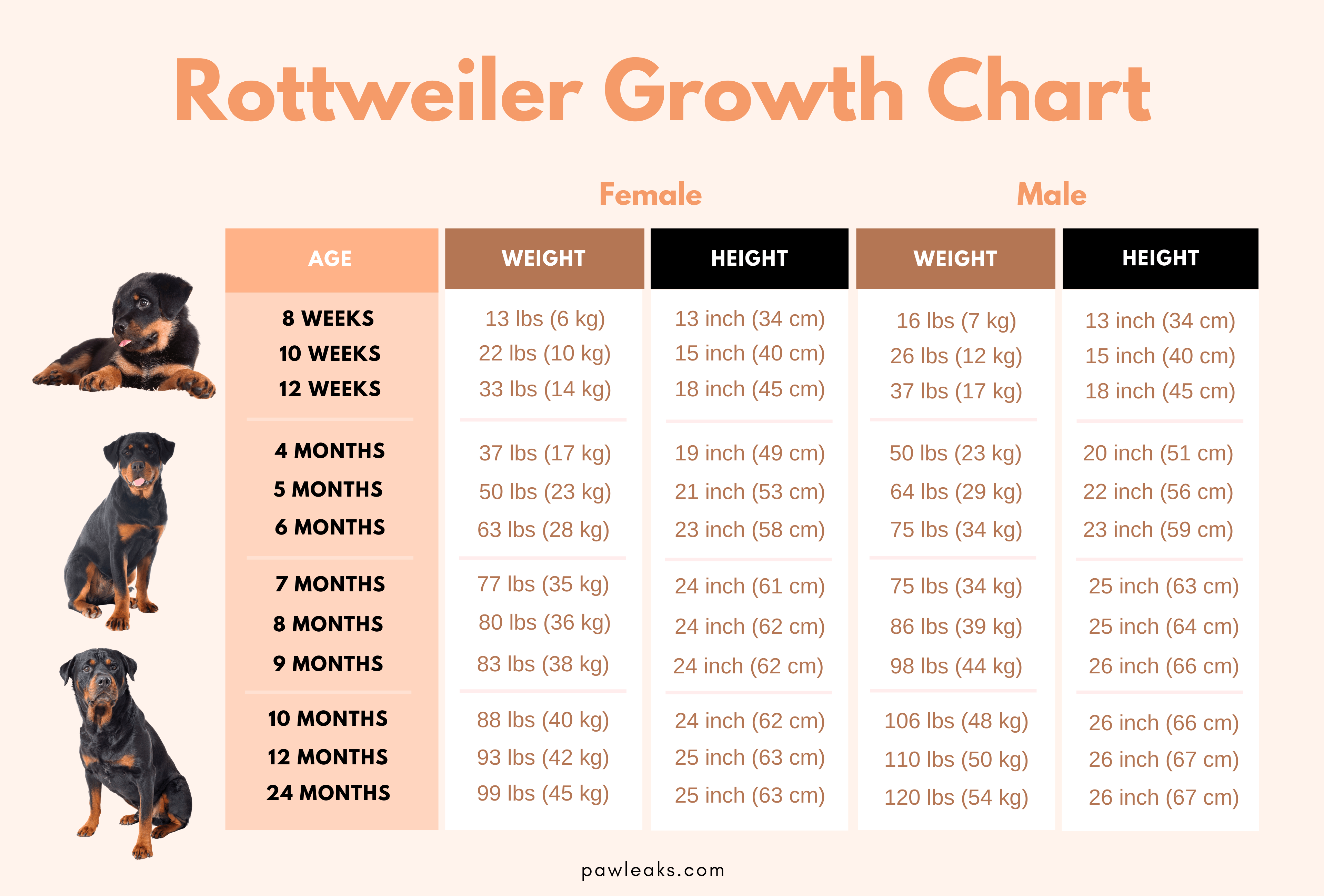
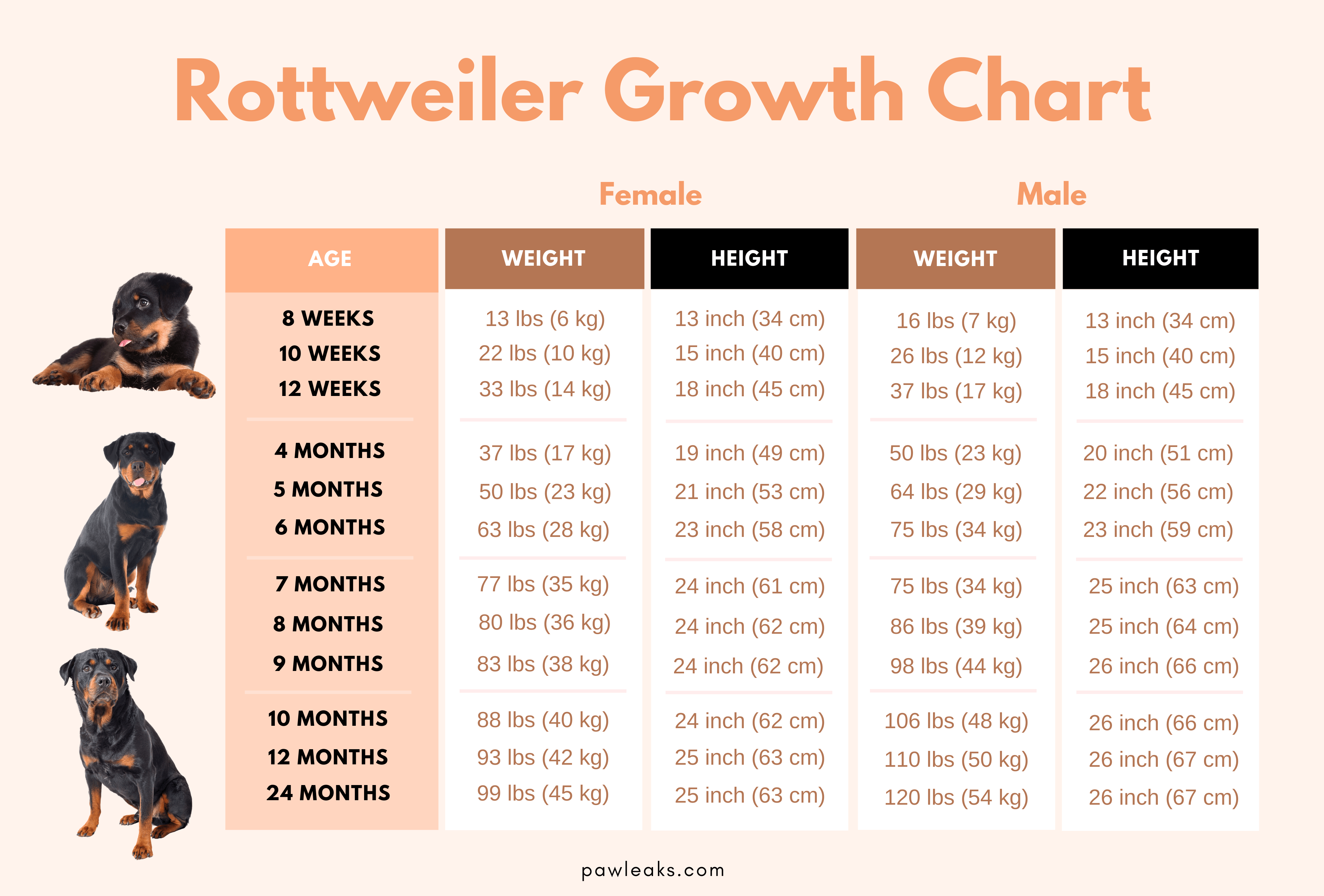
I have also designed a much prettier chart that you can download and print out if you desire.
Rottweiler Growth Stages
During your Rottweiler puppy’s growth period, he will go through several growth stages that are also milestones for his development and behavior.
If you would like to go further into these periods, make sure to check out my guide on all 8 developmental stages.
Now in this post, I won’t go over any of these stages (neonatal, transitional, socialization, juvenile, and adolescence) and rather focus on physical growth.
Puppies grow the most in their first week of life when they double in size from their birth weight.
They will continue to rapidly grow until 6-8 weeks of age.
After that point, puppies will grow for at least several more months (sometimes even a year or two) although the growth rate will be slower.
For the sake of this topic, I have chosen 5 stages between the ages of 10 weeks and 12 months.
10 Week Old Rottweiler
With only 10 weeks of age, your Rottweiler will be enjoying his first days at home with you.
Looking at the growth chart, you can expect him to weigh about 22-26 lbs (10-12 kg) with a height of about 15 inches (40 cm).
His growth plates (soft area of cartilage from which bones grow and extend) and joints will be very soft and wobbly which gives your puppy the signature pup walk.
On average, your Rottweiler puppy will gain about 2.2 lbs (1 kg) per week until 8-9 months of age.
3 Months Old Rottweiler
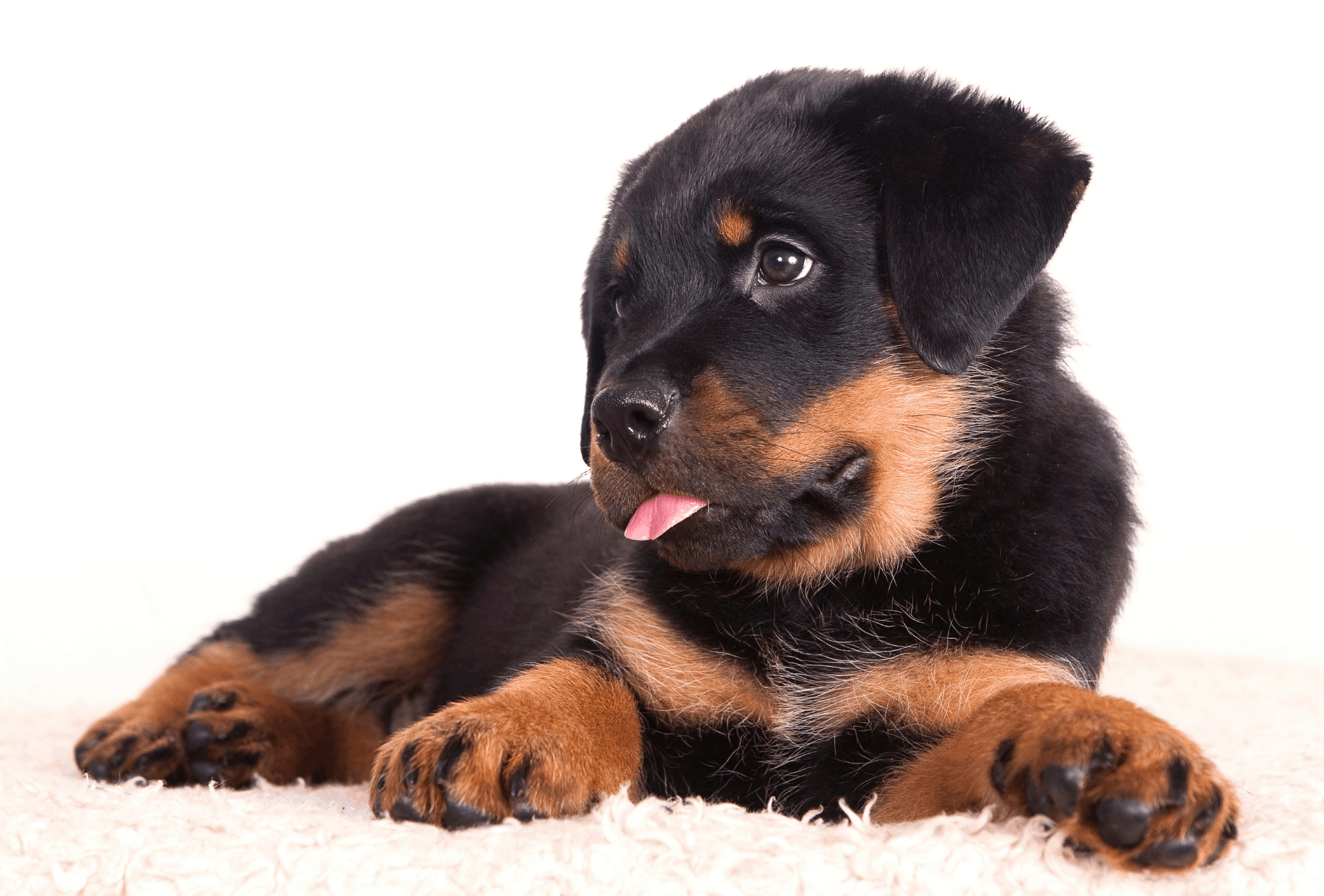
By the age of 12 weeks, he will have gained an additional 11 lbs (4-5 kg) in weight and 3 inches (5 cm) in height.
With the socialization period ending, your puppy has fully developed all his senses and the growth rate starts to slow down.
Puppies will reach their full height before they reach their adult weight.
At 3-4 months of age, puppies will have reached about 60% of their adult height but only 30% of their adult weight.
7 Months Old Rottweiler
Your Rottweiler has now left his main growth period. Between birth and 5-7 months, large and giant breeds will have the most rapid growth during which they reach approx. 65% of their adult height.
He will continue to put on weight and height but at a much slower rate.
You can expect your 7-month-old Rottweiler to weigh about 79-99 lbs (36-45 kg) with a height of 24-26 inches (62-66 cm).
This was around the time when we stopped feeding Amalia her puppy food which we got from the breeder (breed-specific formulation) and changed her diet to raw.
9 Months Old Rottweiler
Your puppy is now in his teenage years and still has a long way to his final size in terms of bulkiness.
Did you know that most small breeds will be fully grown by now? Crazy to think about the different maturity rates within the same species.
At 9 months of age, you can expect your Rottweiler to weigh about 82-98 lbs (37-44 kg) and be 24-26 inches (62-66 cm) in size.
Your dog will also reach reproductive maturity and have all of his 42 permanent teeth. A coat change will leave your vacuum running non-stop.
12 Months Old Rottweiler
Most large and giant breed puppies will stop growing around the age of 12-18 months.
This is also the time when the growth plates harden and fully close.
Now you might have seen in the chart that they can still put on some weight.
This is due to the unique structure of the Rottweiler and other breeds of similar build.
Some Rottweilers grow in size until they are 3 years old. Muscles, as well as broader chests and bigger heads, are the reason for this.
Although the head is something that is growing pretty long, the body is usually the last thing to completely fill out.
So even if your Rottweiler’s growth plates close at the age of 12-18 months, his full visual appearance may change until he is 3 years old.
So if you believe that your Rottweiler is currently looking like a “bubble-head” don’t be fooled by this disproportional appearance as it will probably change over time.
But there are also some Rotties that never “fill out”.
My Rottweiler Amalia hovers around 90 lbs (41 kg) with a height of 24 inches (62 cm) since she was 2 years old.
She looks extremely healthy (you can have a look at her on Instagram @rottweiler.amalia) and I believe this to be her ideal weight.
How to Calculate Your Rottweiler’s Adult Weight
If you are just tired of guessing around then you will probably be happy to hear that there is actually a way to calculate your dog’s adult body weight.
You won’t need any information for that other than your dog’s weight at a certain time so if you don’t know your puppy’s parents, the calculation will still work.
Calculating the estimated size of a medium to large breed dog involves taking the weight at 14 weeks old, and then multiplying by 2.5 to get the final number.
As an example, if your 14-week-old puppy weighs 34 pounds, then take 34 times 2.5 to get 85 pounds as an estimate for your puppy’s adult weight.
What happens if you don’t know how much your puppy weighs at 14 weeks old?
If that’s the case, you’ll get a glimpse of where their adult weight is when they are 6 months old.
A second way to calculate their adult weight is by doubling your Rottweiler’s weight at 4 months old and adding about 10 pounds.
What Is the Average Weight of a Full-Grown Rottweiler?
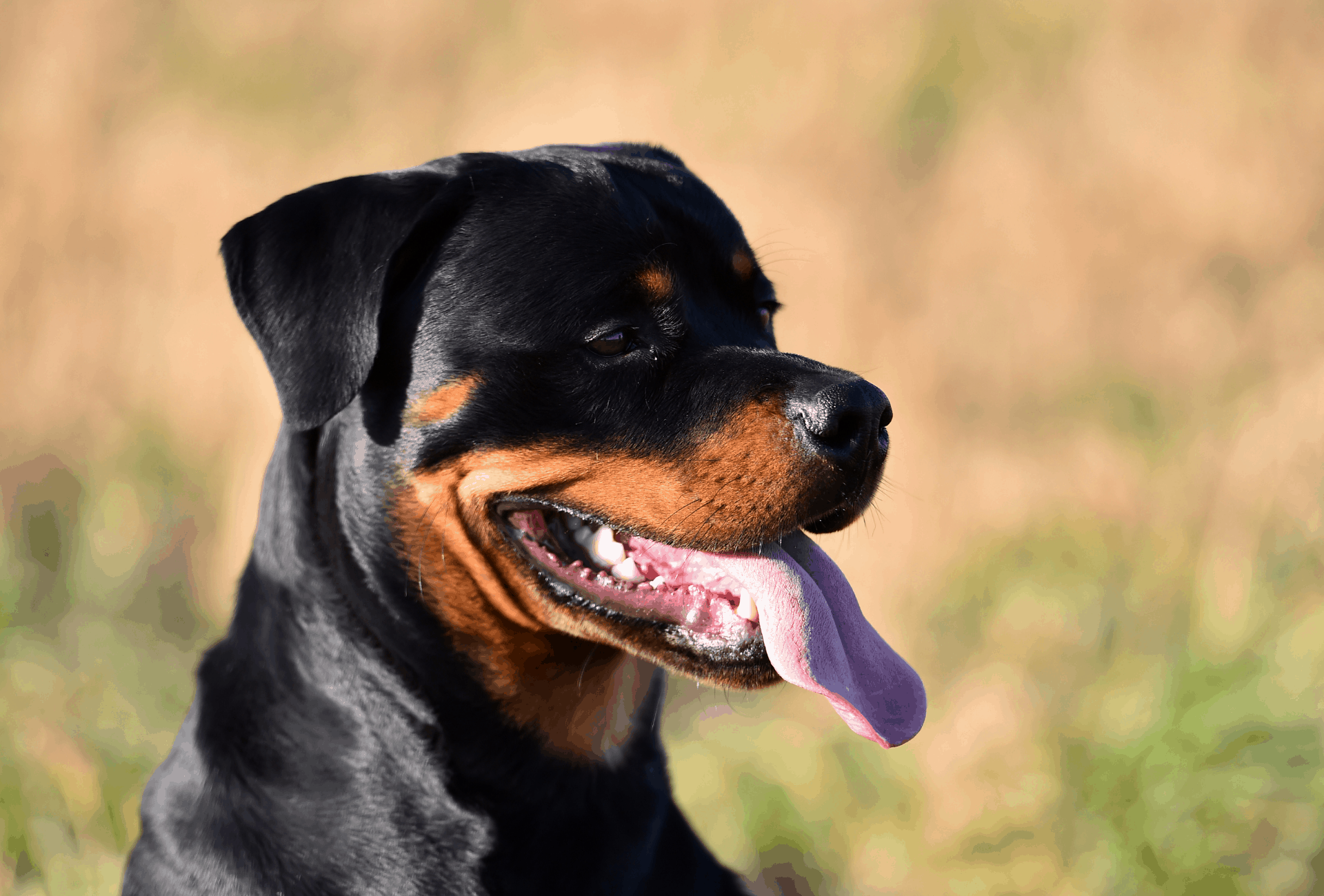
The average weight of a full-grown female Rottweiler could be anywhere from 83-99 lbs (36-45 kg) while an adult male Rottweiler could weigh 110-132 lbs (49-60 kg).
But this is just the average weight and your Rottweiler could weigh more or less than these numbers.
The AKC breed standard lists the average weight as 95-135 pounds for a male and 80-100 pounds for a female Rottweiler.
How Long Does It Take for a Rottweiler to Be Fully Grown?
It usually takes the Rottweiler 12-18 months to be fully grown in height. However, they may still put on weight and broaden their chest until they are 2-3 years old.
In short, Rottweilers stop growing when they are about 3 years old.
Some Rottweilers never fill out their bone structure and they may be finished once their growth plates close.
Be patient and don’t try to speed up the growth in any way.
A Rottie of average height will be fully grown around 18 months which is why it’s crucial to only neuter or spay (if at all) after their bone growth has finished.
How Big Should My Rottweiler Be?
At the end of the day, each and every dog is unique even within the same litter.
Your primary focus should always be your Rottie’s health.
A great rule of thumb that you can follow is simply to try petting your dog.
Can you feel that there is a rib cage underneath or is it covered by a thick layer of skin and fat?
The ribs themselves shouldn’t be visible but palpable.
When you look at your standing dog from above, the waist should be visibly distinct from the rest of the body.
Here’s how to tell if your Rottweiler is fat or muscular.
If you are concerned about your dog’s weight simply ask a veterinarian who’s gained expertise with big boys and gals.
Some vets will have problems evaluating the best weight and size for bulkier breeds.
Here are some of my favorite Rottweiler products
Thanks for reading, I hope your Rottweiler will grow up to be an amazing canine citizen (I know mine did… she surely thinks so).
If you’re interested in what I’ve been using to train my Rottweiler, here are a couple of simple tools.
These are all products I’ve used and would recommend to my own family.
Dog training treats: Due to their quick bone growth, make sure to get natural dog treats.
Avoid using multi-ingredient treats with unhealthy additives.
My Rottweiler’s favorite chews are bully sticks.
Large-breed harness: I’ve used multiple collars and harnesses during my Rottie’s growth phases. This harness is a budget option that held up for a couple of years for me.
Orthopedic dog bed: Not just the buzzword but the real deal – an orthopedic dog bed for your Rottweiler. The investment might seem steep but do you know what hip dysplasia operations cost? Of course, other beds can do the trick too but be safe and pick a good one. It doesn’t have to be this expensive, read my review on chew-proof beds for more.
My Rotti has changed after her heat. More scared of other dogs/umbrellas etc Is that normal?
Sophie
Hey Sophie, if it was your Rottweiler’s first heat, then a behavior change is definitely possible. Even if it wasn’t the first, if your dog is still developing mentally (1-3y) then a behavior change due to the normal developmental stages can correlate with her heat.
However, it’s not usual for dogs to fear other dogs or even umbrellas. Are you sure this cycle is over? Maybe it’s a bit of anxiety induced by the hormones but you should definitely work on this if it turns out to be long-term.
Desensitization can help a great deal with stuff like umbrellas and in regards to other dogs, socializing will be key. Dogs need to socialize well beyond the puppy period.
Although we’ve expected behavior changes, our Rottie didn’t change at all in her heat and up until now (over 2y) there’s no noticeable change. Every dog is different though and I’d just keep an eye on it while working on any issues that may arise.
Cheers,
Danielle
My rottie is now 19 months old and I am worried about his weight, he is 168 lbs. he has access to go out in yard 24hrs a day and I walk him about 2-3 miles a day. I cut out all dog treats in favor of veggie treats. He gets 5 cups of kibble (iams weight control) and 2 cups juiced vegetables. My last rottie stayed with is 13.5 years And was always able to keep his weight down, I have 3 other dogs that help keep him active as well.
Hey Thomas,
for a young, healthy and male Rottweiler, this weight is way above the highest I’ve ever seen which means chances are high that there’s a good chunk of excess weight. That being said, pictures always speak much more than just the numbers. Height is important too if your dog is way above 27 inches/69cm, then yours might just be a huge Rottie.
If he is on the same diet as your other dogs, is fed as recommended and has no access to any food other than the kibble you give him then having him checked out by the vet might be a good idea to rule out any medical issues.
The only thing you can do is reducing his food, increasing acitvity, and switching the diet. Personally, I’m a big fan of the raw diet because it’s the best way to control your dog’s weight (increasing lean muscle meat, changing the meat sources, low/high fat, rumen to boost digestion, etc.)
At some point, you can’t lower the food because your dog needs the nutrients and you can’t increase exercise either. That being said, 2-3 miles per day isn’t all that much if he decides to relax in the yard during the day. Personally, I’m walking my female Rottie 5-10 miles per day + playtime but every dog is different.
Make sure there’s no sugar in your dog’s food or other stuff that doesn’t belong there. You can get a free guide here to find out more about what stuff is in commercial dog food that doesn’t belong there.
You can email me at [email protected] and send me a picture with a profile from above and the side with good lightning. Happy to take a look if that helps :).
Danielle
I would have your dog checked by a vet for thyroid and sugar issues. We have Rotts now but years ago we had a Lab. He was over weight even though we watched what he ate and how much exercise he was getting. The vet kept telling us we were over feeding him. We finally took him to a different vet who checked his thyroid. His numbers were through the roof. He ended up getting diabetes and going blind. He lived 6 years after that because of the wonderful vet we found.
Hey Sue, thanks for the input. It’s really sad that so many vets are just not doing their job right. Instead of just running a couple of tests, the default is to blame it on the owner/environment/genetics/etc. Glad your dog got an extra 6y, hopefully with lots of quality time :).
Cheers,
Danielle
Hi Danielle. I just got a female Rotty puppy who is 9 weeks, however is extremely small when compared to the “averages”…
She is currently only 8 pounds. The sire was 126 and the dam was about 80. The entire litter of 8 were on the small end and she was not the runt. She’s set to see my vet in another week, but until then I’m concerned that she is so small at this stage and might not fully develop into her potential full size. Don’t get me wrong, my family will love her no matter her size. My previous Rotty female was on the smaller side at 75 lbs. But just curious if you have any knowledge on smaller pups and if they ever catch up? At this rate I’m wondering what she might top out at? She seems to be around the size of a 5-6 week old instead of 9-10.
She has had her first vaccination and worm control.
Any insight or feedback is greatly appreciated!
Thanks!!!
Hi Jase, 8 pounds is really small for a 9-week old pup. As you said, having a smaller female shouldn’t be a problem at all but there certainly can be a medical reason behind this.
Another reason could be that she’s not properly digesting the food. Make sure you have a vet who knows the breed and also knows his way around canine nutrition. Personally, I’ve switched to raw food early on because you can control their intake so much better instead of just feeding more kibble of everything, no matter how much fat, protein, meat, etc. but transitioning takes time, of course.
So many vets outright reject unconventional diets and don’t even know the breed standard. Every individual is different and yes, even though a dog is within the size and weight standard, she may still be too heavy (or below the standard but still healthy) but I’ve heard stories about vets pointing out nonsense about a Rottie’s weight. Guess that can happen when you’re handling smaller dogs all day.
Sire has a standard weight with 126, the dam is definitely on the lighter side. Could very well be that your dog ends up in the 75-80 region. For comparison, my pup was around double that weight at 8 weeks old and barely scratches 100 pounds at 2 1/2 years of age at 24 inches (61cm).
It’s important to take into account the height. If she’s not tall in general, that’s less of a problem. Puppies have different growth spurts though, so don’t worry and see what the vet says :).
Hope everything goes well,
Danielle
Jase
My last dog was about that size. She was 8 lbs when I got her at 9 weeks. She always stayed small but admittedly was the runt. I don’t remember her height but her full grown weigh was 80 lbs but I always thought she looked less. I added a quality wet food that was only chicken and nothing more at my vets recommendation. She was always healthy just a little small.
As I’m getting a new puppy soon I’m looking at the raw diet as a possible better option than the standard kibble as I have a friend that switched and has seen an amazing change in her dog for the good.
Hi Perry, thanks for your input, great informartion! Having a healthy pup is the priority for sure. And yes, many dogs can stay healthy with a regular high-quality diet but the more I looked into raw feeding, the more attractive it became.
If you have a question or whatever, just drop a message.
Danielle
Thanks Danielle and Perry for your feedback and input. Vet agreed she is on the smaller side, but not overly concerned. She did test positive for Giardia and we’ve given her the meds they prescribed. So perhaps she wasn’t getting the full nutrition before she came home with me. She seems to be doing better and I can tell she’s growing and putting on more weight. We’ll see at her next vet appointment next week (3 month appt), but i would guess she will be closer to 17-18 lbs by then based on how she’s been charting over the last couple weeks. Still smaller for that age, but seems to be catching up a little.
Yep, worms can definitely be a reason why she wasn’t gaining weight. Most important thing is having a healthy pup, hope the upcoming vet appointment will shed more light on whether or not she was able to catch up in terms of weight/height.
Cheers,
Danielle
Just an update. 23 lbs at the 15 week point. So she’s definitely growing. We’ll see if she catches up. She isn’t overly tall either. Again, seems to be about 4-5 weeks behind in typical/average growth.
Hi Jase, thanks for the update! As long as your pup’s healthy and happy, it’s looking good :).
Cheers,
Danielle
I currently have 2 females, a 23month old who is currently 30kg (should be around 70lbs if my math is correct) and a 18month old at 36kg (even though the diet she is on is specially formulated to keep her weight down) I’m not a fan of too much dleah on the rotties, I like them lean and springy. I was always skeptical with the two year old, she was the runt of her litter and always appeared small but extremely healthy and agile. Now I’ve come to the realization that that’s just who she is and I’ve never loved her less.
Hi David, I’m just curious, the 23-month-old with 30kg does sound extremely lean, what’s her height if I may ask? If she’s on the very small side (57cm or below), then that may all be proportional. In any case, if your dogs are healthy and regularly fed, it’s always best to keep them on the lean side and no shame in that at all, every dog is different :).
Cheers,
Danielle
Hi there,
My Male Rottie has mostly a wallet killing raw food diet. He is just over 5 months old with a beautiful temperament.
He weighs 35.2 kgs and is 60cm at the shoulders.
Seems like he is on the large side of the spectrum.
Hi Shaun, same here but it’s definitely worth it for me. Wait until he’s fully grown, especially if you have a male Rottie.
Yours seems to be on the larger side, but keep in mind that every dog experiences slightly different growth spurts so as long as your vet gives the okay, you feed the proper amount, and exercise enough, you should be good.
Wish you lots of fun with your Rottweiler and definitely enjoy the time, I wish I could back to that time!
Danielle
I would l Iike a chart on rottweiler age and weights for females and male
Hi Joanne, you can view the chart as text as well as a graphic in this article. You can also download the graphic. It lists Rottweiler weights by age for females and males.
Cheers,
Danielle
I understand these charts are just guidelines but they seems SO FAR OFF from my puppy’s reality. My puppy is 4 months, male, and just hit around 30lbs. But according to this page (and other sites), he should be weighing much more. Yet, my vet says he is perfectly fine and healthy and growing normally. My rottie puppy is purebred from a good breeder, and his dad is German while his mom is American. Is my puppy just different than most or are these guidelines over-exaggerated?
Hi Nikki, as you mentioned the charts are just guidelines and show growth on average – with a tendency toward larger individuals. There are definitely small male Rotties who will never exceed 90-100lbs (40-45kg). My female Rottie was heavier than your male at 4 months (and she was pretty slim as a pup), but that can just mean that he’s a smaller specimen or that he’ll experience growth spurts at different stages.
A visual examination and feeling for the ribs/spine provide a much clearer picture. Just make sure your vet is familiar with large breeds and everything should be fine if you feed your Rottie correctly with high-quality food.
Hope that clarifies it,
Danielle