

 Veterinary reviewed by
 The black, cute nose is a loved canine feature and it’s the most common color you will see.
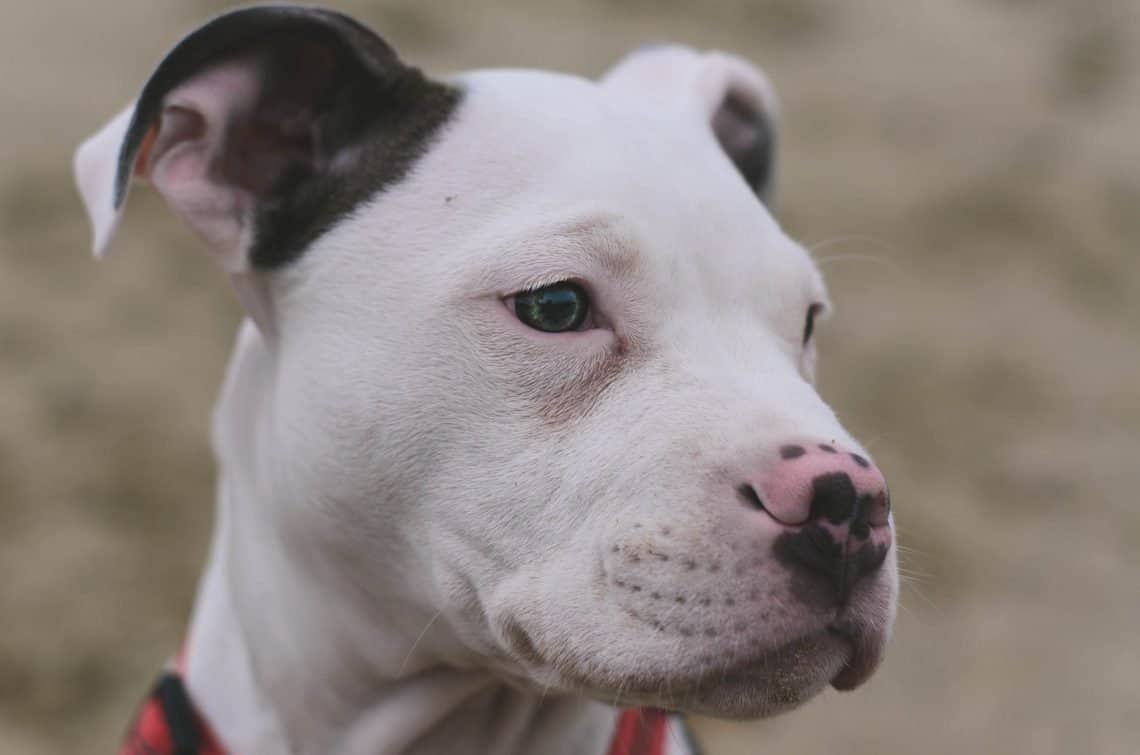
When running across a puppy or dog that deviates from the norm you ask yourself “Why do some dogs have pink noses”?
But just like different coat colors, your dog can have different nasal tones and pigmentation.
There are five main nose variations: liver (pink), dudley, butterfly as well as blue, and black.
Genes directly affect the coloring of a dog’s nose but pigment loss can also cause a change in color resulting in the dudley nose.
Injuries can lead to damaged pigment on the nose which could be temporary or permanent.
If you want to learn more about the pink phenomenon then keep on reading.
You’ll also get a few tips on how you have to care for your dog’s pink nose.
Why Do Dogs Have Pink Noses?
Dogs have pink noses due to melanin and nose color can turn pinkish due to weather or age. However, loss of pigmentation, sunburn, or infections can also turn the nose color lighter.
Dogs come in all shapes, sizes, and color variations.
Most of them have been achieved through selective breeding or mutations that have been passed on over generations.
Some dogs are born with a black nose and others have matching snouts to their coat colors.
Nose color is generally regulated by the amount and distribution of melanin in a dog and can change with age and breed.
But why do they have pigmented noses?
Melanin is used to protect the nose from sunburn and skin cancer and we utilize its pigmentation to determine a dog’s true color.
Do Dogs Noses Stay Pink?
Puppies may be born with a light or pink nose that darkens as they get older. This change in color could already happen by the age of 8-16 weeks or even one year.
Genetically red or liver dogs are being born with a liver nose that stays pink their whole lives.
If a liver puppy is born with a black nose, it’s a sign that the puppies from this particular bloodlines aren’t truly red and shouldn’t be sold as such.
Even dogs with pink noses can experience a slight color tone change over the years which is also affected by the amount of sun exposure.
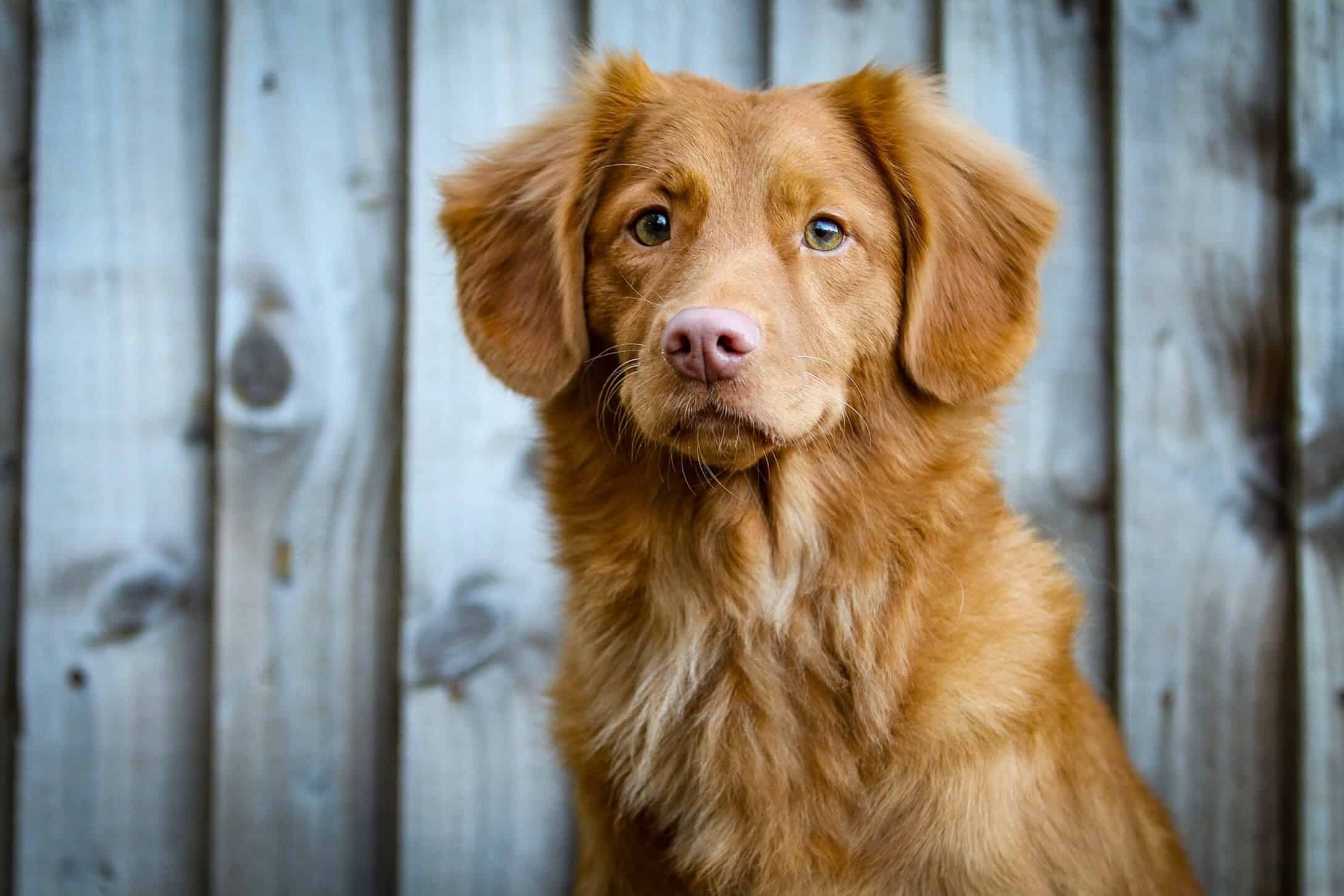
Dog Breeds With Pink/Liver Nose
Dog breeds with liver noses include the Field Spaniel, Pointer, English Springer, Cocker Spaniel, Dalmatian, Australian Shepherd, Siberian Husky, and Nova Scotia just to name the most common.
The liver gene is recessive, so it must have the genotype bb in order to be superficially present.
On the other hand, a BB or Bb dog (meaning either or both carry the dominant black gene) would have a normal black nose.
For a liver dog, it’s genetically impossible to develop a single black or grey hair.
Instead, liver will turn the coat brown, the eyes amber and the nose color will range from brown to pink.
Certain dog breeds like the Irish Setter may resemble a liver dog but are indeed just a recessive red with dark pigmentation.
On the contrary, liver dogs might not even be labeled as such as in the case of the “Chocolate” Lab.
The brown nose and yellow eyes are the results of the liver gene and therefore they are liver dogs.
Dog breeds that can have liver/pink noses include:
- Field Spaniel
- Pointer
- English Springer
- Cocker Spaniel
- Dalmatian
- Australian Shepherd
- Siberian Husky
- Nova Scotia
- Bull Terriers, Boxers, and Heelers may be born with pink noses that stay for their whole lives.
In conclusion, a red, brown or even white-coated dog with amber eyes and a liver or pink nose is carrying this gene.
Sometimes the liver color might not be included in the breed standard so be careful when choosing your dog.
Genetics is a very interesting matter and can be highly interesting for any potential puppy buyer when it comes to temperament and behavior.
Dudley Nose
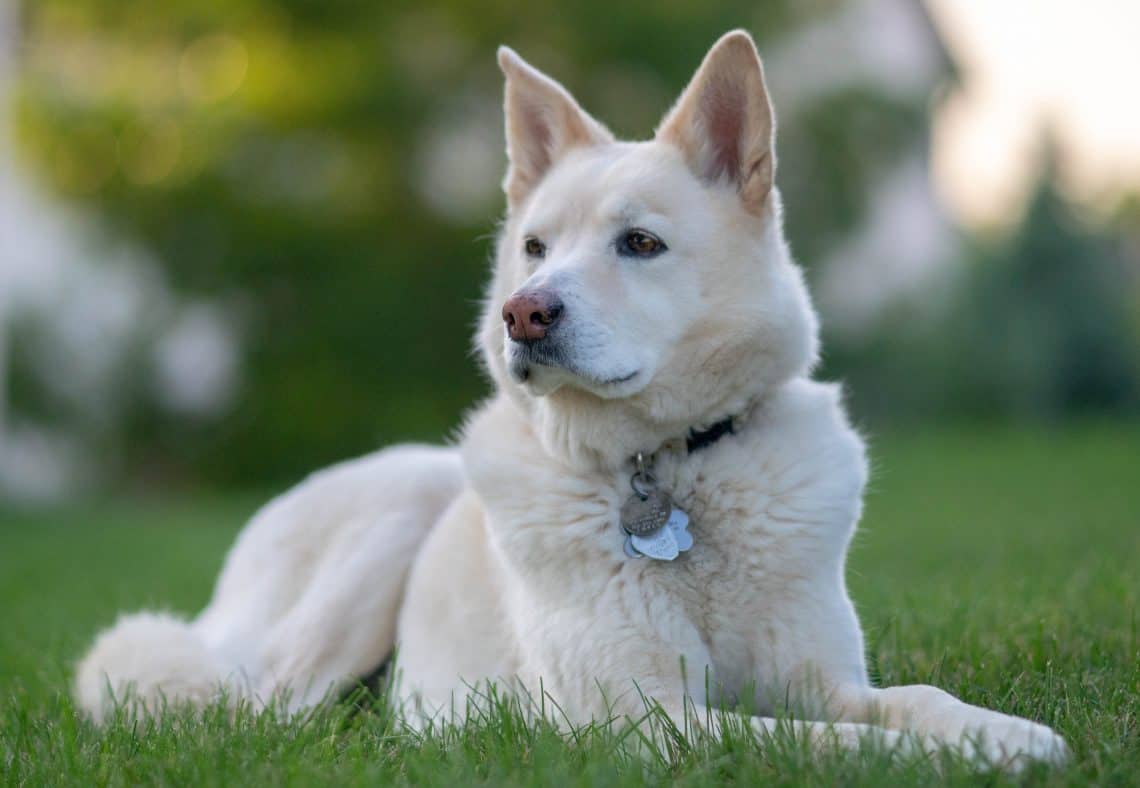
The dudley nose is the result of pigmentation loss due to illness or environmental influences which I will be talking more about below.
The usually black nose begins to turn pinkish in the middle, spreading outwards until almost the whole nose is covered.
Compared to the pink of a liver or butterfly nose, this color appears rather dull and always leaves a rest of dark pigmentation around the edges.
Pink noses in Bull Terriers are often referred to as dudley noses although the color mostly emerges from the white coat, not from a loss of pigmentation.
These breeds are prone to developing a dudley nose:
- White German Shepherd
- Doberman Pinscher
- Pointer
- Poodle
- Irish Setter
- Golden Retriever
- Samoyed
Recommended Reading: Do dogs have lips?
Snow Nose
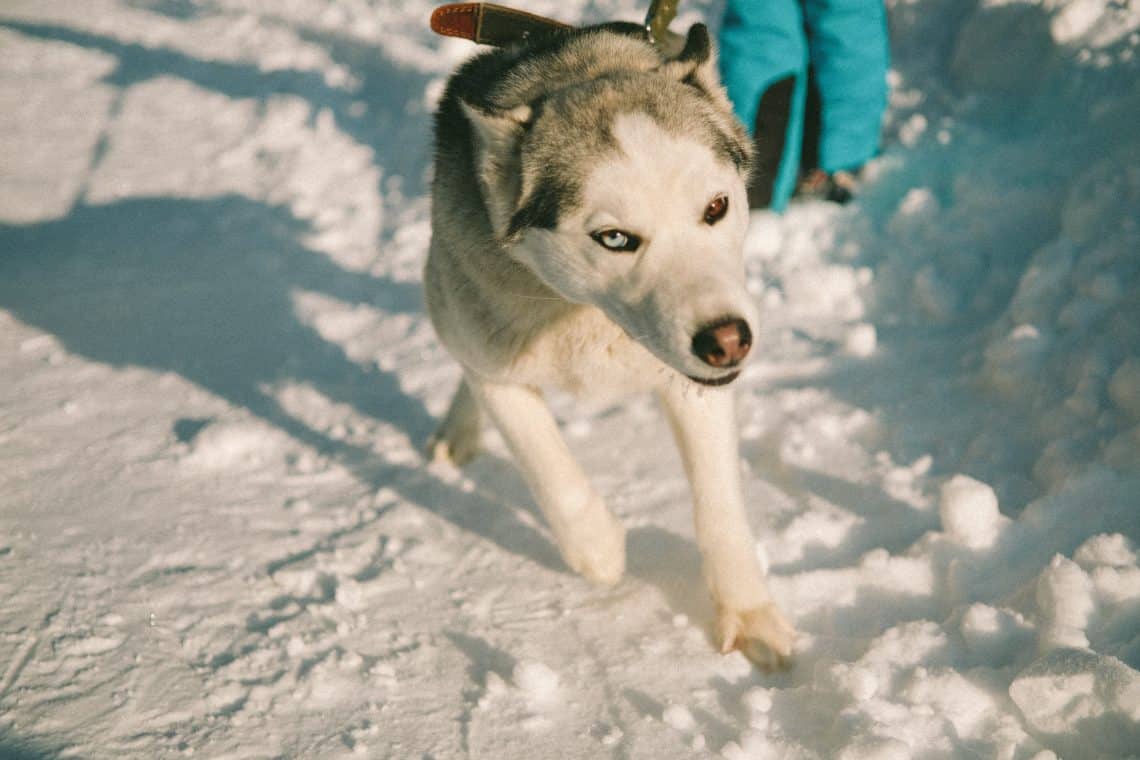
Snow noses, also called “winter noses”, are similar to dudley noses with the big difference that they are not permanent.
During the winter months, the dog’s nose might turn pink and in spring it will switch back to its natural color.
Weather-dependent color changes appear in the:
- Siberian Husky
- Labrador Retriever
- Bernese Mountain Dog
- German Shepherd
- Golden Retriever
But don’t be fooled by the name winter nose, dogs that don’t live in cold temperatures can also develop this color change.
The cause of the snow nose is unbeknownst but treatment gladly isn’t required as the nasal color change is only a cosmetic issue.
Some suggest that the enzyme Tyrosinase (which controls the production of melanin) causes this phenomenon because it’s temperature-sensitive.
Butterfly Nose
A butterfly nose is defined as randomly located patches of unpigmented (pink/liver) and black spots that resemble the wings of a butterfly.
This beautiful and unique-looking nose is courtesy of these breeds:
- Dogo Argentino
- Boxer
- Bull Terrier
- mostly associated with merles
What Causes Pink Noses on Dogs?
Dudley noses can develop from a variety of causes.
If you suspect that the depigmentation of the nose is linked to an underlying disease, consult your vet immediately.
I have listed the most common reasons below:
Age: As the body ages, the production of melanin decreases causing grey hair and paler skin in humans. Depigmentation of the nose is a common occurrence in senior dogs.
Weather: The snow nose is the result of weather-dependent nasal color changes and develops back to its natural state after the cold season ends.
Bacterial Infection: Infections that affect the nose result in an inflamed, crusty, or sore appearance. The nose leather may seem lighter than usual and your dog might display additional symptoms like sneezing or fever.
Injury: Cuts caused by trauma may turn pinkish in the recovery process as the healing tissue builds up.
Allergies: A skin reaction to allergies might manifest in the nose area after direct contact with the trigger. The nose might appear sore and crusty and symptoms similar to a nasal infection may develop.
Sunburn: The sensitive non-pigmented part of your dog’s nose will get sunburned if it’s excessively exposed to sunlight.
Recommended Reading: Everything you need to know about dog jowls
How to Care for a Pink Nose
Similar to pale human skin, pink noses need more protection from the sun than dark skin or black noses.
Applying specialized doggy sunscreen like the Handy Hound SnoutScreen during the summer month will prevent painful sunburns on your dog’s sensitive nose.
Apart from that, pink noses need the same care as darker ones and should be regularly moisturized with Dog Nose Butter to avert and cure chapped and crusty snouts.
Labs With Pink Noses
Labrador Retrievers can have a pink nose and are oftentimes referred to as “Dudley” Labradors.
Yellow Labs are usually born with pink noses that turn dark when they grow older but Dudley Labs stay that way.
These Yellow Labs are pretty special and only occur out of specific mating combinations.
However, in conformation, the Labrador would lose some points for his pale nose since it’s not part of the AKC breed standard.
What breed of dog is the first one pictured? The longer haired red dog with a pink nose.
Hey Tina, that is a Nova Scotia Duck Tolling Retriever. A relatively rare breed and really good-looking, right?
Cheers,
Danielle
We adopted a shelter pup two years ago this January… he was estimated to be a year old, and a “Dorgi” (Dachshund Corgi mix). But he looks _exactly_ like the pup in the picture at the top. Including the liver(?) pink nose. I recently sent in his “Embark” DNA test, so I assume we will find out! But there is an app called “Dog Scanner” that searches an image DB to match breed, and it came back with Nova Scotia Duck Tolling Retriever as well (plus a couple other things possibly mixed in, including Dacshund.
Here are some pics: https://photos.app.goo.gl/Z1EpTWaCD43usK1K9
Hey Mark,
yep, judging by the pics of your dog, there could definitely be some Nova Scotia mixed in. The striking color, coat texture and nose you see in the photo above are a characteristic of the Nova Scotia. Quite a rare dog breed in most countries though.
Going by the size, Corgi and Dachshund could definitely be good bets too, not seeing that much Doxen characteristics though. Some kind of Collie mixed in could be a possibility too.
I’m sure you’ll be surprised when the DNA test comes back as there are sometimes dog breeds that would’ve never been guessed by anyone, albeit to a smaller percentage in most cases :).
Cheers,
Danielle
Thanks for the response 🙂
Keep us updated with the results 🙂
Hello,
I am purchasing a Yorkshire terrier and I just received a photo and the puppy has a blotches of pink on his nose. Is this cause for concern?
Hey Kelly,
The Yorkshire Terrier usually has a black nose. However, puppies may change colors of coat, eyes (I actually have an article on temporarily blue-colored eyes of Pitbull puppies), and nose.
A Dudley nose could be the case here although the loss of pigmentation would be rare in a puppy. Pups with Butterfly noses are usually born like that. Other reasons for this could include environmental factors, illnesses, cross-breeding (are the puppies registered with papers?), and albinism (in which case the nose should be pink only).
If you could send a link to your pup’s picture or contact me at [email protected], I’d be happy to have a look. It’s important to know whether the pup was born with a Butterfly nose, changed from pink to black blotches or vice versa.
Also, just contact your breeder about it and see if they have a reasonable explanation. Here are all the questions your breeder should be able to answer anyway.
Cheers,
Danielle
Danielle,
I just forwarded you the last picture I received. My sister and I both put a deposit down on unborn puppies. This was the first picture I received of my puppies face. She sent previous photos of them but you could not really see their faces. They are supposed to come with papers.
If a Maltese mix Shih Tzu is born with a pink nose will it turn black as it gets older? If so by what age?
Hi Mary,
since both dog breeds have very light coat colors, pink noses are definitely possible but you can never tell if it’ll disappear once they’re adult dogs. However, it’s most likely that the nose will turn out to be black.
Another cause could be Albinism and with crossbreeds in general, it’s important to ask for health testing if you’re buying a puppy from a breeder. Personally, I’d always suggest purebreds with health certificates if you’re buying from a reputable breeder.
Cheers,
Danielle
My 1-yr-old, 20-lb, pomeranian’s nose just recently turned pink on the top. (DNA was 100% Pomeranian, even though he’s so big) I live in Southwest US, and he has metal bowls. I’ll take him to the vet if I must, but my husband has compromised lung function, so we are pretty strictly quarantining. Any thoughts?
I have a small chocolate dog seems gonna be smaller, has beutiful green eyes, pink nose, inside mouth all pink too. Looks like a little bear cub with a curled tail. Can you tell me anything about it. Love its attitude.
Hi Charlotte, sounds great! Besides the info on pink noses, it’s hard to say anything without knowing the breed/appearance of your dog :). The breeder or rescue might also be able to tell you something about the personality.
Have a great day,
Danielle
Im a breeder with a stunning Blue Merle Aussie Shepherd x Golden Retriever pup of 6 weeks that was born with a black nose that at 4 weeks went bright pink with black surrounds. No inflammation. Dad is Red Merle with pink bits but mostly brown/black. The mum owner says that they used to feed their dogs some 30 or 40 years ago with a minetal supplement that used to darken their noses but can’t remember what it is. Any ideas?
Hi, thanks for commenting! First of all 6 weeks is still very young and the nose can completely change until the age of 3 or 4 months. Small pink pigments can even fill out until they are 1 year old.
I have heard of one supplement that is made of elderberry and nettle and used to darken up the pigmentation by increasing iodine and iron intake which is lower in older dogs and during the winter months. However, the effect and safety of such supplements aren’t proved or tested.
There is really nothing wrong with a speckled nose as long as the puppy and both parents are healthy.
I have a 6-month-old miniature Australian Labradoodle (see Instagram link, @ihuckleberryme) who has a pink nose. We have always considered it liver-colored, but is he actually a “Dudley”? His pink/liver nose (and other visible facial skin like eyelids and lips) have not changed in the 4 months since he joined our family. It’s a very distinctive look that always gets a reaction when people meet him, and I’m wondering if it is likely to change or not.
Thanks for your helpful article!
Hi Ehren,
dudley noses are characterized by a pinkish (usually very pale) center with black on the edges. Your sweet boy’s nose has a perfect liver color to it that is evenly colored and very common in Labradoodles with similar coats. At six months of age, the nose will most likely stay the same or darken a bit.
Some dogs change their liver nose during the winter months to a more pinkish tone which happens due to the lack of sunlight.
Best regards,
Danielle
Hi my mini dachshund has a pale line right down the middle of her nose, that has always been there. She is Black and Tan. Is this a sign of dapple or chocolate gene? The line is pale grey/liver. Or is this Dudley nose?
Hi Diane, depending on how prominent the color is it could be a dudley nose. It greatly depends on your weather, your dog’s age, and parents. However, different colored noses usually don’t appear in Dachshunds and it may be something your dog will grow out of.
What about Border Collie with Butterfly nose?
Why did the term “liver” come to be chosen in reference to pink colour of nose. I know it refers to colour name in established color chart BUT why was it called liver and let’s say, not just pink? How much or how little is this term a direct reference to the color of the human liver organ?
Hi Jacqui,
what a great question! It is not quite clear where the term “liver” in reference to a color actually came from but it was first recorded in the 17 century. The color liver has little resemblance to the actual pale pink that some dog noses have. For example, the nose of a Chocolate Lab is also referred to as “liver” and couldn’t be called pink.
While the color liver refers to a dark reddish-brown, the organ is a more deep reddish-brown.
Cheers,
Danielle
You forgot one breed for liver noses – Vizsla. I have a 9-year old Vizsla and his nose has been pink since the day he was born!
There is a breed from India which is called the Ghost Hound or Rajapalayam (since it originated from the place called Rajapalayam from south India) is born and lives it’s life with pink nose. It’s a breed that the Indian Government has a stamp made for it. So famous it is. This is for your information.